

Sheet Pan Lemon Garlic Butter Salmon That Actually Stays Juicy

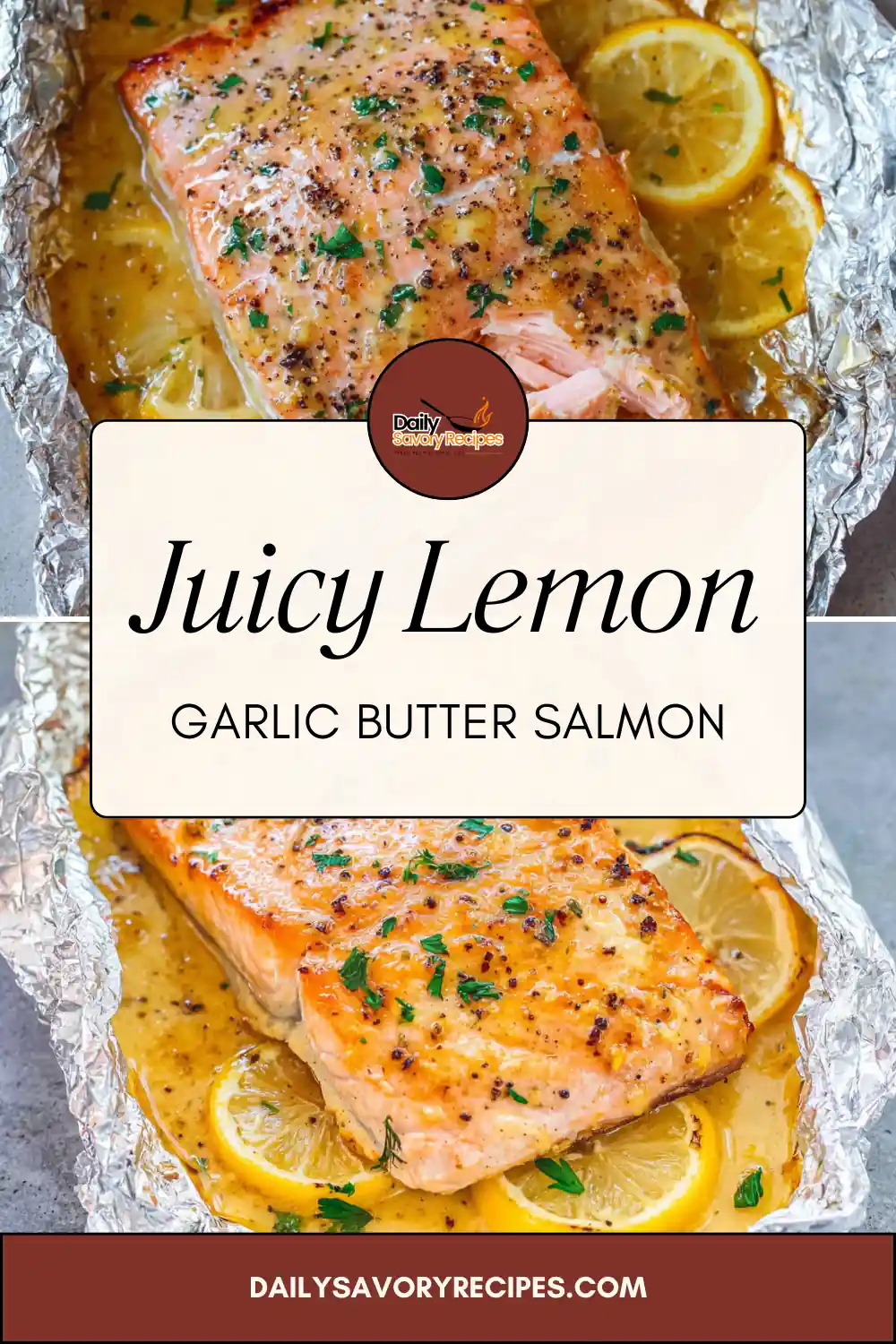
Sheet Pan Lemon Garlic Butter Salmon is one of those dinners that earns a permanent spot in the weekly rotation. The salmon cooks gently inside the foil packet, the butter keeps everything moist, and the lemon cuts through the richness so the dish still feels light enough for a weeknight meal.
I’ve tested this method with both large fillets and individual portions, and the foil makes a noticeable difference. It traps steam just enough to protect the fish without turning it soft or watery. You’ll also learn how to broil the top properly so the salmon gets a little color without drying out underneath.
Why This Sheet Pan Lemon Garlic Butter Salmon Works on Busy Nights
Some salmon recipes demand constant attention. This one doesn’t. Once the foil packet is sealed, the oven handles most of the work while the butter, lemon juice, and garlic slowly flavor the fish from underneath and above.
The timing is forgiving, too. A thick center-cut salmon fillet usually takes about 17 minutes at 375°F, then another few minutes under the broiler if you want more color on top. The foil keeps the fish from losing moisture too quickly, which helps even if you accidentally leave it in an extra minute or two. That matters on busy evenings.
Cleanup stays manageable because everything cooks inside the foil packet on a single sheet pan. Worth it.
Ingredients That Build the Lemon Garlic Butter Sauce
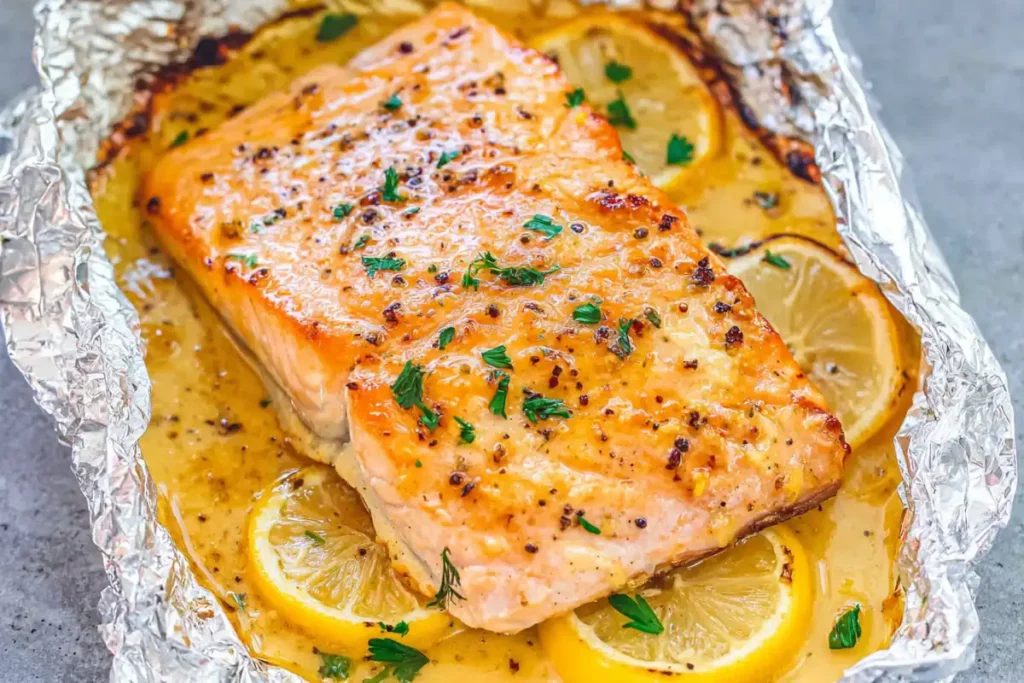
This recipe uses basic ingredients, but each one has a job to do. The butter creates the sauce and protects the salmon from drying out in the oven. Lemon juice brightens the richness, while a small amount of honey softens the sharp edge of the citrus without making the dish sweet.
Fresh garlic works better here than garlic powder. Since the sauce only cooks briefly before baking, minced garlic keeps a stronger flavor and gives the butter more depth. I usually mince it fairly fine so it melts into the sauce instead of sitting in harsh little pieces on top of the fish.
Choosing the Right Salmon Fillet
Skin-on salmon is the better option for this method. The skin acts like insulation against the heat from the sheet pan and helps the fillet hold together when it becomes tender. A fillet around 1½ to 1¾ pounds cooks evenly without drying around the edges before the center finishes.
If your salmon is especially thin near one end, tuck that portion slightly underneath itself before sealing the foil. Small adjustment. Big difference.

Fresh Lemon vs Bottled Juice
Fresh lemon matters here because the recipe is simple enough that every ingredient comes through clearly. Bottled juice tends to taste flat once mixed into melted butter. Fresh slices placed underneath the salmon also perfume the fish while it bakes, which you don’t get from juice alone.
Easy Swaps and Variations That Still Work
You can adjust this recipe without changing the overall method too much. For a dairy-free version, use a plant-based butter that melts smoothly rather than one with a strong coconut flavor. Some alternatives separate badly once heated with lemon juice, so choose one meant for cooking.
Vegetables can also cook alongside the salmon if they roast quickly. Thin asparagus, zucchini slices, or green beans work well because they finish in roughly the same amount of time. Dense vegetables like potatoes usually need a head start in the oven first.
I sometimes add crushed red pepper flakes to the butter mixture when I want a little heat. Not enough to dominate the lemon. Just enough to wake everything up.
How to Bake Sheet Pan Lemon Garlic Butter Salmon Without Drying It Out
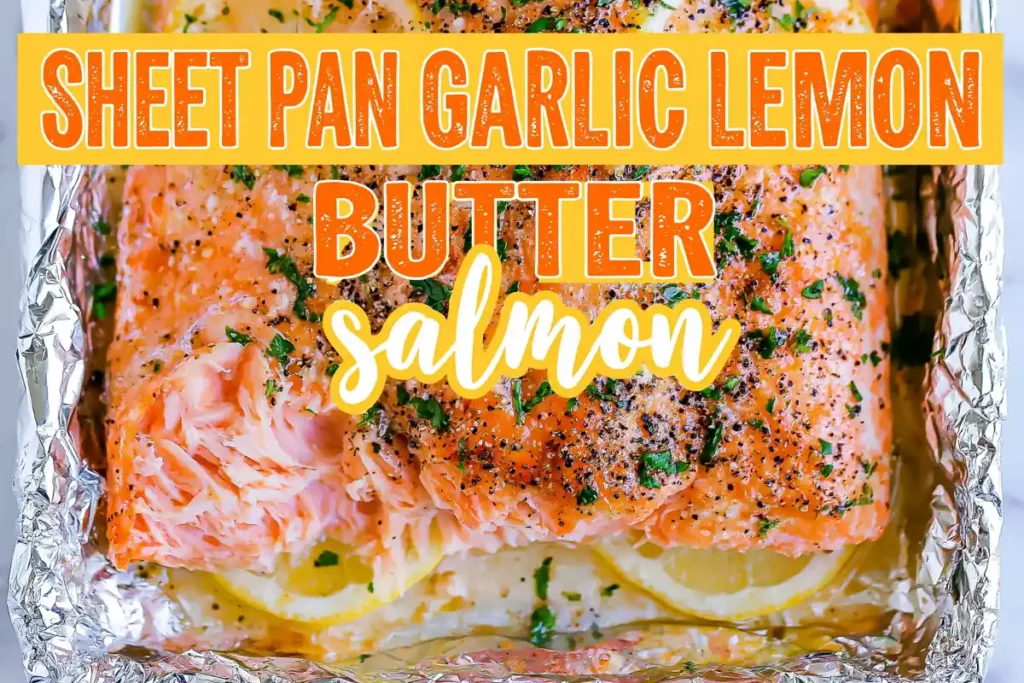
The foil packet is doing more work than most people realize. Once sealed, it traps steam from the butter, lemon juice, and salmon itself. That humid environment slows moisture loss and keeps the fish tender while still allowing the top to brown later under the broiler.
Start by placing the salmon skin-side down on foil with the longer side parallel to the sheet pan. Raise the edges slightly before pouring over the butter mixture so nothing leaks immediately onto the pan. Lemon slices tucked underneath the fish help lift it slightly while adding flavor underneath.
After pouring most of the butter mixture over the salmon, season generously with salt and black pepper. Then seal the packet tightly enough to hold steam inside. It doesn’t have to look perfect. Just avoid large openings where liquid can escape during baking.
Why the Foil Packet Matters
A bare sheet pan exposes the salmon directly to dry oven heat. That usually cooks the outer edges too fast before the center is ready. Inside foil, the salmon cooks more evenly because the heat circulates gently around the fish instead of blasting it from above.
If you’ve had salmon turn chalky or white protein leak all over the surface before, excessive heat was probably part of the problem.
When to Broil the Salmon
After baking, open the foil carefully and keep the edges raised so the butter sauce stays contained. Then spoon over the reserved buttery mixture if the pan doesn’t already look overly full.
Broiling for 5 to 10 minutes adds color and slight caramelization to the top. Watch closely during this step. The difference between lightly golden and overcooked salmon happens fast under a broiler, especially if the fillet is thin near the edges.
The center should flake easily while still looking slightly glossy.

Small Details That Make a Big Difference
This recipe is straightforward, but a few small choices affect the final texture more than people expect. Letting the salmon sit in the butter mixture for even 10 to 15 minutes before baking gives the garlic and lemon more time to work into the surface of the fish. You don’t need a long marinade here. In fact, too much lemon juice for too long can start changing the texture of the salmon before it even reaches the oven.
Another thing worth paying attention to is the thickness of the fillet. A thinner tail section cooks noticeably faster than the center. If one end starts looking dry before the middle flakes easily, tent that portion loosely with foil during the broiling step.
Marinating Time
Short marinating works best because the sauce contains acid from the lemon juice. Around 15 minutes gives you better flavor without making the outer layer of the salmon overly soft. If you’re short on time, you can skip it entirely and still get a solid result.
I prefer pouring most of the sauce over immediately and reserving a smaller portion for the broiler stage. That second layer freshens the flavor at the end.

How to Tell When Salmon Is Done
Forget the idea that salmon should look pale pink and completely dry in the center. That’s usually overcooked. The thickest part should separate easily with a fork while still looking slightly translucent in the very middle.
For temperature, around 125°F to 130°F gives you a softer texture, while 135°F to 140°F is more fully cooked. I usually pull it closer to the lower end because the fish keeps cooking slightly after leaving the oven.
What to Serve With Lemon Garlic Butter Salmon
The sauce from this salmon naturally spreads across the plate, so sides that can catch some of that buttery lemon mixture work especially well. Rice is an easy choice, but roasted baby potatoes or crusty bread do the job just as well.
For vegetables, I lean toward simple options with a little freshness. Roasted asparagus, green beans, or a sharp salad with vinaigrette balance the richness better than heavy cream-based sides. If you already have the oven running, slide a second tray of vegetables onto the lower rack during the last 15 minutes of cooking.
Cold leftovers over salad the next day? Also good.
Keeping Leftovers Moist When Reheating
Salmon dries out quickly once reheated too aggressively. The microwave usually overheats the outer edges before the center warms through, so I prefer using the oven whenever possible.
Place the leftover salmon in a baking dish with a spoonful of the buttery sauce or a splash of water, then cover loosely with foil and warm at 300°F for about 10 minutes. Low heat helps preserve the texture instead of tightening the proteins further.
Leftovers generally keep well in the refrigerator for about 2 to 3 days. I wouldn’t push it much longer than that with seafood.
Frequently Asked Questions
Can I Use Frozen Salmon?
Yes, but thaw it fully first for more even cooking. Excess ice or trapped moisture can water down the butter sauce and affect the texture inside the foil packet. Pat the salmon dry before adding the seasoning.
Do I Have to Broil the Salmon?
No. The broiler mainly adds color and a little caramelization on top. If your salmon is already cooked to your liking after baking, you can skip that step and serve it immediately.
Can I Use Another Fish?
You can. Trout and arctic char work particularly well because they have similar fat content and cook at a comparable rate. Lean white fish tends to cook faster and may need less oven time.
What Can Replace Butter?
A good plant-based butter substitute works best if you need a dairy-free version. Olive oil is possible too, although the sauce will feel lighter and less rich overall.
A Reliable Dinner Worth Repeating
Some recipes only work when everything goes exactly right. This isn’t one of them. Sheet Pan Lemon Garlic Butter Salmon is flexible enough for a busy weeknight but still feels like a proper meal you’d happily serve to guests.
The foil method does most of the heavy lifting. Keep an eye on the broiler, don’t overcook the center, and the salmon stays tender every time. Every recipe I share is an invitation from my kitchen to yours.
PrintSheet Pan Lemon Garlic Butter Salmon

Tender salmon baked in a foil packet with lemon, garlic, butter, and honey for an easy weeknight dinner with minimal cleanup.
- Prep Time: 10 minutes
- Cook Time: 22 minutes
- Total Time: 32 minutes
- Yield: 4 servings 1x
- Category: Main Course
- Method: Baking
- Cuisine: American
Ingredients
- 1.5 to 1.75 pounds skin-on salmon fillet
- 1 lemon, thinly sliced
- 3 tablespoons butter
- 2 tablespoons fresh lemon juice
- 2 tablespoons honey
- 5 cloves garlic, minced
- 1 teaspoon kosher salt
- 1/2 teaspoon black pepper
- 2 teaspoons chopped fresh parsley
Instructions
- Preheat oven to 375°F and place the salmon skin-side down on a large sheet of foil with the edges raised slightly.
- Tuck lemon slices underneath the salmon evenly and set aside.
- Melt the butter in a microwave-safe bowl, then stir in the lemon juice, honey, and minced garlic.
- Pour about three-quarters of the butter mixture over the salmon and reserve the rest for later.
- Season the salmon evenly with salt and black pepper.
- Seal the foil packet tightly, adding another piece of foil on top if needed, and let the salmon marinate for 10 to 15 minutes if time allows.
- Place the foil packet on a baking sheet and bake for about 17 minutes.
- Open the foil packet carefully while keeping the edges raised to hold the sauce inside.
- Set the oven to high broil and spoon the reserved butter mixture over the salmon if desired.
- Broil the salmon for 5 to 10 minutes until lightly golden and cooked to your preferred doneness.
- Garnish with fresh parsley and serve immediately.
Notes
- Use skin-on salmon for the best texture and moisture retention.
- Fresh lemon juice works better than bottled juice in this recipe.
- Watch the salmon carefully during broiling to prevent overcooking.
- The salmon is done when it flakes easily but still looks slightly glossy in the center.
- Store leftovers in the refrigerator for up to 3 days.
Nutrition
- Serving Size: 1 fillet portion
- Calories: 485
- Sugar: 8
- Sodium: 620
- Fat: 31
- Saturated Fat: 11
- Unsaturated Fat: 17
- Trans Fat: 0
- Carbohydrates: 10
- Fiber: 1
- Protein: 39
- Cholesterol: 128